


Last Updated: August 2026
What are the best Veeva RIM alternatives for a growing regulatory team? If you're outgrowing spreadsheets or evaluating options besides Veeva Vault RIM, there are three practical paths: a DIY document stack (SharePoint, Box, or Egnyte plus e-signature) for early-stage teams; standalone RIM, QMS, and TMF tools for teams with dedicated functional owners; or a unified RegOps platform like Kivo that combines all three in one validated, Part 11-compliant system built for lean teams needing enterprise-grade compliance without Veeva's six-figure budgets and multi-month rollout.
If you're exploring Veeva RIM alternatives, you're likely part of a growing regulatory team that’s moving beyond spreadsheets and shared drives but not quite ready for a heavyweight enterprise platform.
Veeva is a powerful system designed for large, centralized pharma companies with the resources to implement, configure, and maintain it. For small to midsized life sciences teams, however, the cost, complexity, and timelines can be daunting.In this guide, we want to offer three alternative paths to implementing Veeva and help you figure out which is best for your unique team and project:
- Why Veeva's model isn't always right for small teams
- DIY document management with SharePoint, Box, or Egnyte
- Standalone solutions for RIM, QMS, and TMF
- Unified RegOps platform designed for decentralized teams
- Comparing your options at a glance
- FAQ
If you’re weighing your next step after outgrowing manual processes, this guide will help you make a more confident, informed decision. But before we explore options, let's quickly address some of Veeva's limitations and why simply waiting until you can afford to license and implement their RIM software might not be the best choice.
Why Veeva's Model Isn't Always Right For Small Life Sciences Teams
Veeva is currently a ubiquitous name and popular choice for a RIM system within the life sciences field.
When Veeva launched in 2007, it was designed to serve the needs of the industry at that time: big pharmaceutical companies with centralized teams, long timelines, and massive, specialized infrastructures.
And it did an amazing job, offering a more modern solution that quickly made it THE market leader. Veeva's model of complex systems with heavy customization was the enterprise standard at the time, and to this day, it continues to serve the needs of the $100B+ pharmaceutical companies it's designed for.
But it's not 2007 anymore, and the life sciences industry of today looks very different than it did two decades ago.
For starters, software capabilities have come a long way.
- Functions that used to require heavy customization can now be easily provided within flexible platforms, meaning expensive, custom development with every software rollout is no longer the norm.
- Advancements in cloud computing have made scalable, secure platforms more accessible than ever, eliminating the need for heavy infrastructure or on-premise support.
- Real-time collaboration, automated audit trails, and integrated submission workflows are now baseline expectations rather than premium features.
The shift is showing up in the numbers, too: the global RIM system market is valued at $2.5B in 2025 and projected to reach $5.1B by 2033, a 9.1% CAGR (Grand View Research), reflecting just how many growing teams are actively moving off spreadsheets and legacy processes.
But perhaps more importantly, the teams using these systems have changed.
Today’s regulatory teams are often leaner, more decentralized, and moving faster than their predecessors. Instead of operating within large, centralized pharma companies, they’re working across geographies, juggling multiple submissions, and wearing many hats, often with limited IT or administrative support.
Veeva is not designed for these types of modern teams, and while it can certainly get the job done, we think the following three Veeva RIM alternatives are worth considering for small to midsized life sciences teams.
A note before we dig in: this guide is not an independent ranking, and it doesn't assess implementation quality, market share, or fitness for your specific organization. Veeva, the standalone tools named below, and Kivo are all represented factually based on publicly available information — validate any option against your own team's requirements before deciding.
Option #1: The Low-Cost DIY Document Management Stack
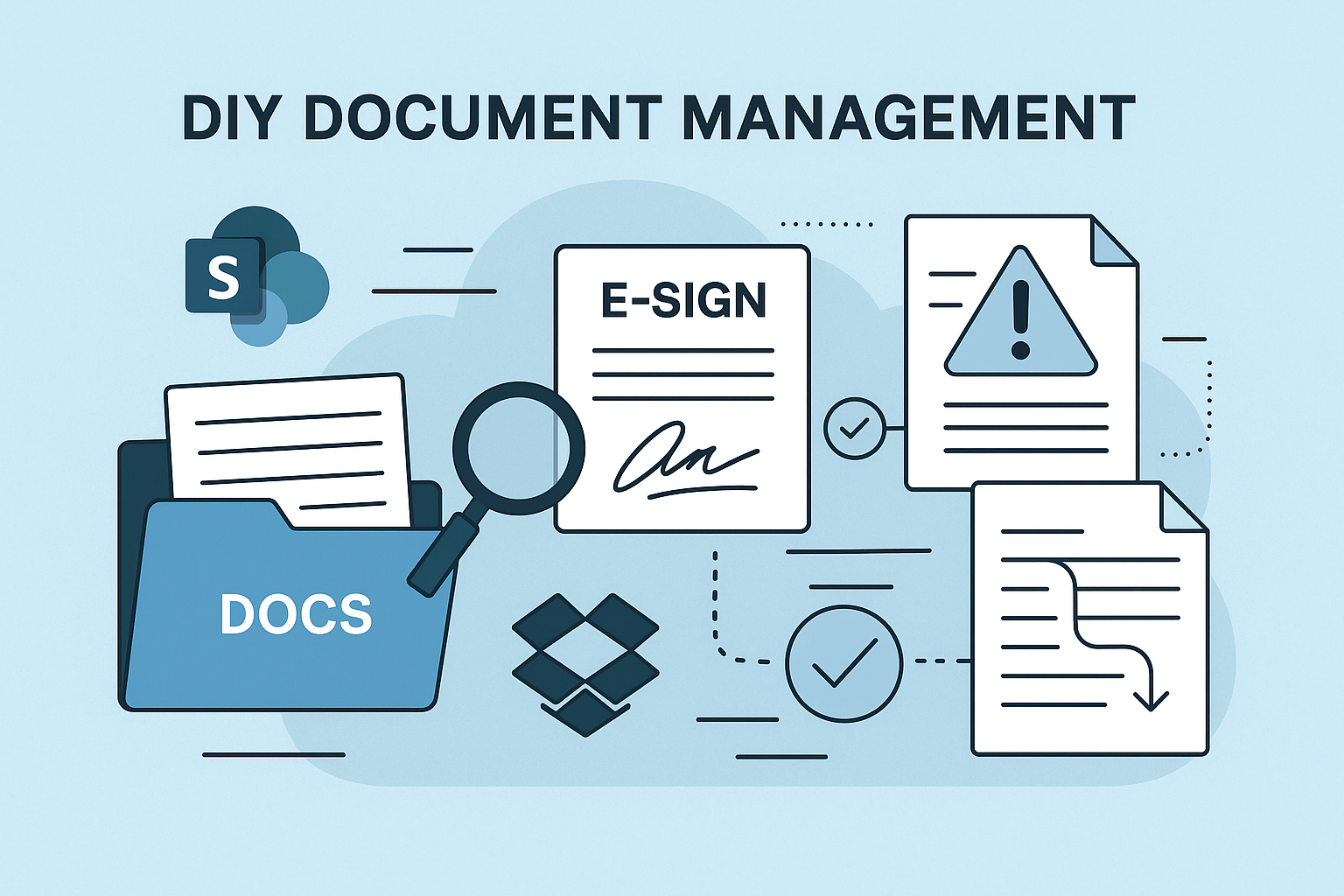
DIY document management is where many regulatory teams begin, and understandably so. When your team is in its earliest phases, with just a few submissions or key documents to manage, it makes sense to work with the tools (and budget) you already have.
Systems like SharePoint, Box, or Egnyte are often the default: familiar file storage systems that are easy to roll out with little or no training. Combine that with an e-signature tool like Adobe Sign, and maybe a Part 11 overlay from a vendor like Montrium or Carahsoft, and you’ve assembled a basic compliance toolkit without breaking the bank.
Benefits of DIY Document Management
This approach comes with some key benefits:
- Low upfront cost: You're using software you're already paying for in your IT stack.
- Familiarity: No learning curve for your team, since everyone already knows how to upload, comment, and share using these tools.
- Customizable (sort of): You can create folders, apply naming conventions, and build your own workflows around the tools you have.
For preclinical or early-stage teams, this approach can get the job done... for a time.
Downsides of DIY Document Management
While the DIY stack is an accessible entry point, it comes with serious trade-offs, especially as your team matures or your regulatory workload scales.
- Not fully compliant: Just using e-signatures or storing documents on SharePoint doesn’t automatically make your system 21 CFR Part 11 compliant. Validation, audit trails, access controls, and long-term traceability all require significant customization or manual oversight. The stakes are rising: the FDA issued 303 drug and biologics warning letters in FY2025, up 59% from 190 in FY2024, underscoring how quickly compliance gaps can escalate.
- Lack of version control and audit integrity: File duplication is rampant. When you have four versions of the same protocol floating around in different folders (or inboxes), you risk using the wrong file in a submission, which can delay approvals or trigger audit findings.
- No publishing capabilities: DIY systems aren’t built for preparing or managing eCTD submissions. Teams often have to export documents, move them into publishing software manually, and reconcile metadata outside the system, processes that tend to be time-consuming and prone to errors.
- Hard to collaborate across functions: Without a shared system of record, regulatory, clinical, and quality teams end up duplicating documents or sending PDFs back and forth over email. There’s no end-to-end visibility or traceability.
In some ways, the biggest downside to using DIY document management is that you WILL have to transition at some point in the product lifecycle, and the longer you wait to do so, the more time and money will be required to retroactively validate a homegrown system or integrate third-party overlays.
When To Use This Option (And When Not To)
DIY document management only really makes sense when you are in the earliest phases of development: preclinical or working on your first IND or 510(k) with a low document volume.
It's fast, flexible, and AFFORDABLE while you prove out your science and build operational muscle.
But once you have multiple regulatory projects in motion, interactions with global health authorities, or a growing team that needs consistent processes, the DIY stack can start to feel more like a duct-tape-solution than a real system.
It wasn't designed to scale... and it won’t.
Most teams that start with this approach eventually hit one or more of the following moments
- An auditor asks for a training record or document history you can’t fully verify
- A submission is delayed because someone published the wrong file version
- You spend weeks trying to validate your file system retroactively
- Your team is constantly chasing documents across folders, inboxes, and signatures
These are often the inflection points that trigger a move to a more purpose-built RIM solution.
Option #2: The Mix-and-Match, Standalone Solution Stack
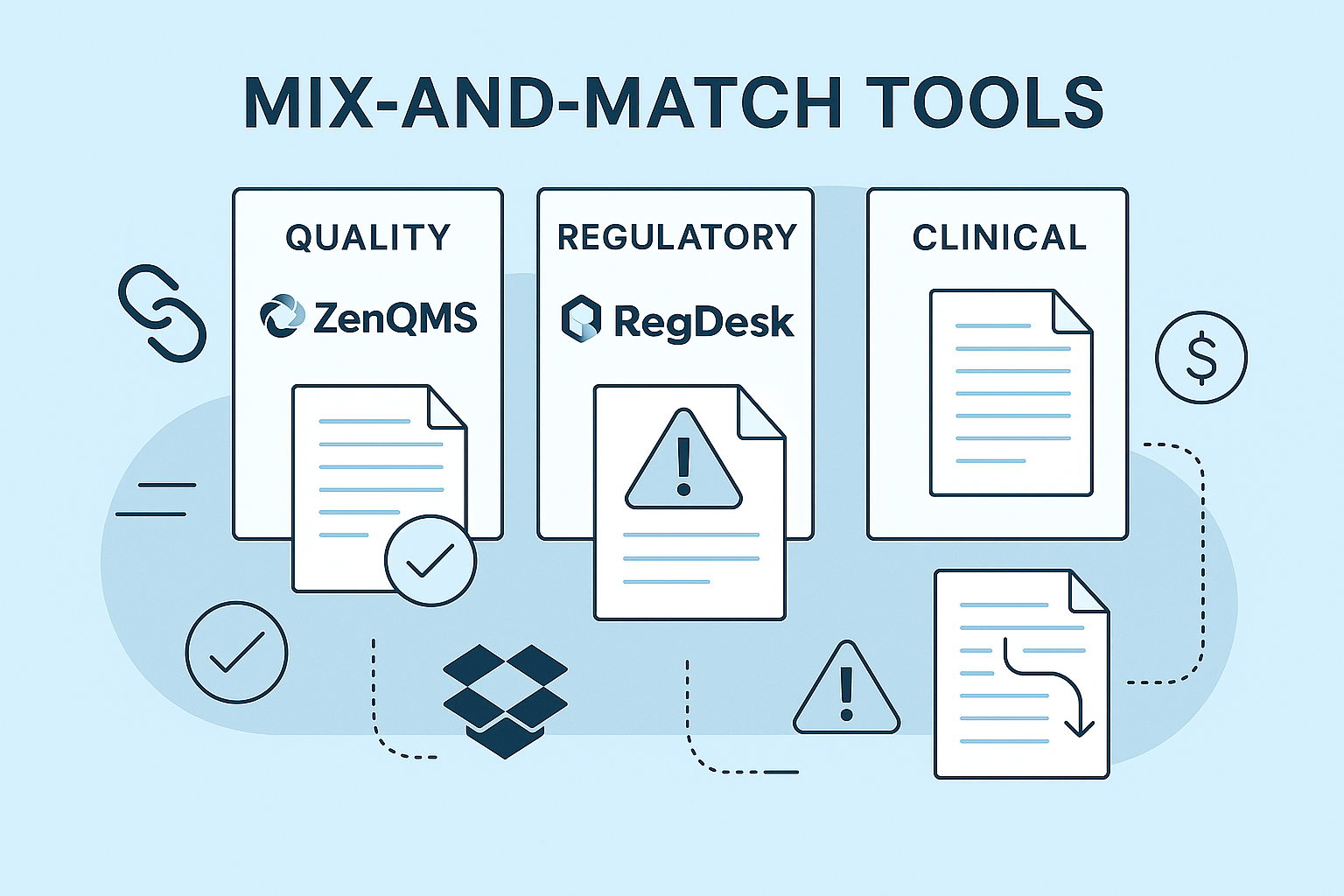
When teams outgrow DIY document management, the next logical step is often a mix-and-match approach: combining specialized tools for different functions based on immediate needs.
You might use ZenQMS for Quality, RegDesk for Regulatory, and lean on a CRO to manage your TMF.
This approach offers more structure and functionality than DIY systems, while still letting you stay modular and budget-conscious. You can buy only what you need, when you need it, and avoid the big upfront commitment of an all-in-one platform.
Benefits of Mix-and-Match Tools
This approach brings several advantages for teams with well-defined needs:
- Function-specific depth: These tools tend to go deep on their domain. ZenQMS, for example, focuses solely on quality workflows. RegDesk automates regulatory intelligence and tracking. That specialization can result in highly effective tools for the specific tasks they focus on.
- Flexibility: You don’t have to buy into a massive platform all at once. You can address immediate pain points as they emerge, and it's easier to replace systems that aren't working the way you need them to.
- Familiarity with vendors: CROs often come with tool preferences or partnerships already in place, and leveraging their stack can be convenient, especially if they’re managing part of the process anyway.
This setup works reasonably well for companies that have strong operational discipline, dedicated leads for each function, and enough bandwidth to manually reconcile across systems.
Downsides of a Mix-and-Match Tech Stack
Part of what makes mix-and-match a great option is that it doesn't require a lot of foresight. If you realize one day that you need a solution for Regulatory or Quality or anything else, you can simply address the specific issue at the specific time it's needed.
But as you might expect, solutions that are great for a last-minute fix aren't always optimal over the long haul, and long-term issues are mostly where we see the downsides to this option
- Siloed systems = extra work: These tools rarely “talk” to each other out of the box. Integration can be complicated, and in most cases, each department ends up managing its own version of reality in terms of documents, naming conventions, metadata, and status tracking... then having to reconcile records across multiple systems.
- No shared audit trail: When Quality approves a document, but Regulatory uses a different version for submission, there’s no clean, cross-functional record of how that happened — and no easy way to prevent it from happening again.
- Reliance on CROs can balloon: If you don’t have internal bandwidth to manage these fragmented systems, you’ll likely depend more on your CRO. That can drive up cost and reduce visibility into your own submission lifecycle.
- Scaling becomes painful: What works fine with 5 people and 50 documents doesn’t always work with 20 people and 300 documents across 5 active submissions. The gaps between systems get wider, and the burden of stitching things together grows exponentially.
What this mostly comes down to is that mix-and-match systems are... mix-and-match systems. When you have a decentralized team working from multiple locations, on multiple projects, with multiple document versions, the downsides of siloed systems become painful.
Incidentally, this is a problem for Veeva RIM users as well. Veeva's RIM, QMS, and TMF modules are completely different software that have been mostly bolted together rather than truly integrated, as Veeva leaves advanced integration to the in-house development teams of it's $100B+ customers.
For smaller teams with less in-house resources, however, integration challenges can become a notable source of ongoing pain.
When To Use This Option (And When Not To)
The mix-and-match approach is often a smart transitional strategy, especially for teams that are too mature for DIY but not yet ready for a fully unified platform.
It works best when:
- You have dedicated leads in each functional area who can own their respective systems
- Your submission volume is still relatively manageable
- You’re in a phase of growth where incremental tooling makes sense
But as your team grows or your workload accelerates, this approach tends to hit diminishing returns. A few telltale signs:
- Your team is spending more time syncing systems than moving work forward
- Version errors or process gaps are starting to show up in audits or submissions
- You're being asked to "integrate" systems that weren't designed to work together
- Your CRO costs are climbing faster than your internal capacity
If your team is dealing with these issues now or wanting to avoid them down the road, you'll want to look at implementing a unified RegOps platform built for long-term scalability.
Option #3: The Unified RegOps Platform
Just like Veeva was designed in 2007 to meet the software needs of large pharmaceutical companies, Kivo was designed in 2021 to meet the current needs of small to midsized life sciences teams.
We looked at the downsides of Veeva, DIY document management, and mix-and-match solutions, and realized the market needed a single, unified RegOps solution... so we built one.
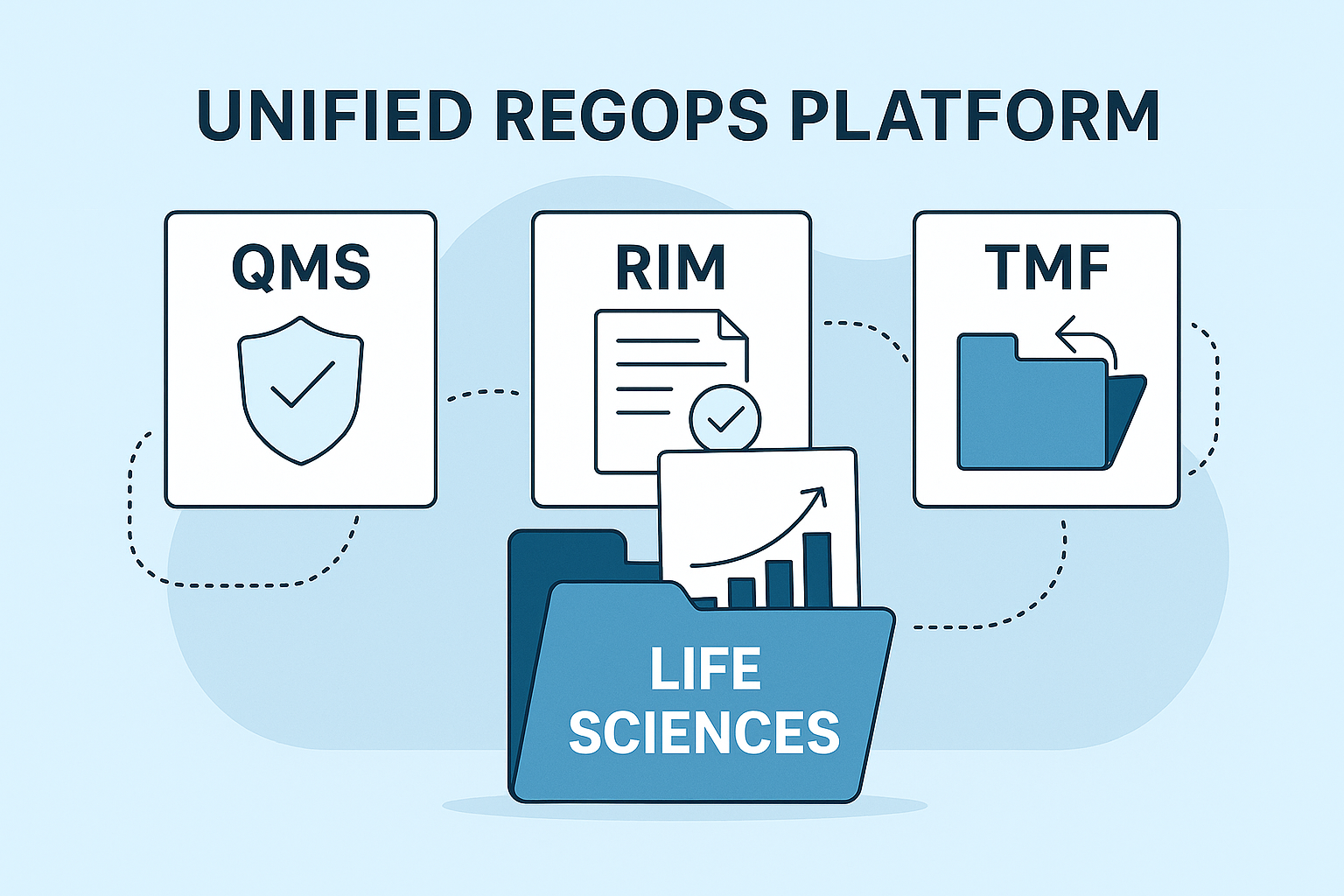
Kivo's platform provides a single, unified document management system that can power ALL of your departments: clinical, regulatory, quality, and more.
That means when your Clinical team drafts a protocol, it’s not locked in a separate system. The exact same file can be reviewed by Quality for training materials, shared with vendors, and seamlessly included in a Regulatory submission, without creating duplicates or jumping between platforms.
There’s no version confusion, no manual stitching of workflows, and no wasted time. Instead of forcing teams into fragmented processes and retrofitted integrations, Kivo brings them together in real time with shared access, traceability, and control.
Benefits of a Unified RegOps Platform
The biggest benefit of Kivo's unified platform is that it brings everything together:
- One document, one source of truth: Instead of uploading the same file to multiple tools or departments, your team works from a shared document that flows from authoring to submission without duplication or confusion.
- Connected workflows across departments: Regulatory, Clinical, and Quality teams can collaborate in real time, with traceable approvals and version control across the board.
- Faster time to value: Kivo was built using modern software design, which means it can be deployed in just a few weeks (not months), requires very little (if any) training to use, and benefits from hundreds of small quality-of-life improvements (bye-bye tedious, repetitive tasks).
- Built-in compliance: Features like audit trails, e-signatures, user permissions, and metadata tracking are part of the system from the start, no add-ons or overlays needed.
- Top-rated on G2: Kivo RIM is the highest-rated RIM software on G2, at 4.9/5, and today supports 200+ sponsor, consultant, and CRO teams.
And perhaps most importantly, we designed Kivo to make financial sense for smaller life sciences teams that want to scale over time. Our pricing is affordable enough to make sense even when you're in the preclinical phase, we offer modular rollout if you want a fast solution for only Regulatory, Quality, or TMF in the short term, and we scale easily as your projects, locations, and staff multiply over time.
Downsides of a Unified RegOps Platform
While we designed Kivo to be the ideal solution for small to midsized life sciences teams, there is no such thing as a one-size-fits-all solution, and we have our downsides as well.
- Less configurability than enterprise systems: If you need complex, highly bespoke workflows or have a sprawling global infrastructure, Kivo is not designed for the level of customization desired by $100B pharma companies.
- Requires some change management: Transitioning from spreadsheets or disconnected tools to a shared platform requires buy-in from multiple stakeholders. Even if the system is easier to use, shifting habits takes time.
- Added cost in early stages: If you're still preclinical, with a single IND or low submission volume, budget allocation can be critical, and implementing a system like Kivo will take up budget for what is more of a "nice to have" in the short term.
In other words, if your team is very new or very big, we might not be the best fit.
When to Choose A Unified Platform
Kivo's unified platform is ideal when:
- Managing multiple submissions or engaging with multiple global health authorities
- Scaling beyond ad hoc processes and starting to build formal regulatory infrastructure
- Frustrated by disconnected systems or growing reliance on CROs
- Ready to invest in tools that will support long-term growth, without locking into a complex, costly enterprise contract
In short, a unified platform like Kivo hits the sweet spot for teams that are too complex for DIY, too decentralized for mix-and-match solutions, but not quite at the $100B level Veeva is designed for.
Comparing Your Options At A Glance
The right fit depends on where your team is today. Here's how the four approaches compare on the factors that matter most to a growing regulatory team:
| Approach | Best For | Typical Setup Time | 21 CFR Part 11 Compliance | Cross-Functional Visibility | Typical Cost Range |
| DIY document stack (SharePoint/Box/Egnyte + e-signature) | Preclinical teams, first IND or 510(k) | Immediate (uses existing tools) | Requires significant manual validation and overlay | Low — manual cross-checking between tools | Low (existing IT spend) |
| Mix-and-match standalone tools (e.g., a dedicated QMS, RIM, and CRO-managed TMF) | Teams with dedicated functional leads and defined budgets | Weeks to months per tool | Varies by tool; each must be independently validated | Low to medium — siloed by function | Medium (per-tool licensing, adds up) |
| Unified RegOps platform (Kivo) | Growing teams managing multiple submissions across Clinical, Regulatory, and Quality | A few weeks | Built in, pre-validated | High — single shared system of record | Scoped to team size; modular rollout available |
| Enterprise RIM (Veeva Vault RIM) | Large, centralized pharma with dedicated IT and validation staff | Months | Built in, enterprise-grade | High, with heavier configuration overhead | High — typically six-figure-plus budgets |
Once you've picked a direction, explore Kivo's RIM solution, seehow to implement a RIM system step by step, learn how an early-stage biotech pipeline should weigh the same decision, or read what a modern RIM system actually includes.
Frequently Asked Questions
What's the best Veeva RIM alternative for a small regulatory team?
It depends on stage. Very early teams often start with a DIY document stack. Teams with dedicated functional leads sometimes assemble standalone tools per function. Growing teams managing multiple submissions across departments typically move to a unified RegOps platform like Kivo, which centralizes RIM, QMS, and eTMF in one validated system without Veeva's enterprise-scale cost and timeline.
Is a DIY stack like SharePoint, Box, or Egnyte 21 CFR Part 11 compliant on its own?
Not automatically. Storing documents and collecting e-signatures doesn't by itself satisfy Part 11 — validation, audit trails, access controls, and long-term traceability all require significant additional customization or manual oversight layered on top.
How long does it take to implement Kivo compared to Veeva Vault RIM?
Kivo is typically deployed in a few weeks, following a five-step process built on the EDM Reference Model. Veeva's enterprise model, designed for large centralized pharma companies, generally involves a multi-month implementation and heavier configuration.
Can a mix-and-match tech stack scale as a regulatory team grows?
It works reasonably well short-term for teams with strong operational discipline and dedicated owners per function. As submission volume and headcount grow, siloed systems tend to create integration overhead, inconsistent audit trails, and rising reliance on CROs to reconcile records across tools.
See Kivo In Action
If your team is growing and you're starting to feel the friction of disconnected systems, long implementation timelines, or workflows that just weren’t built for smaller regulatory teams, Kivo might be the right next step.
Kivo was designed to help small and midsized life sciences companies work smarter, with tools that streamline document management, simplify publishing, and keep cross-functional teams aligned throughout the submission process. Whether you're managing a single product or scaling globally, Kivo makes it easy to stay organized, compliant, and on track.
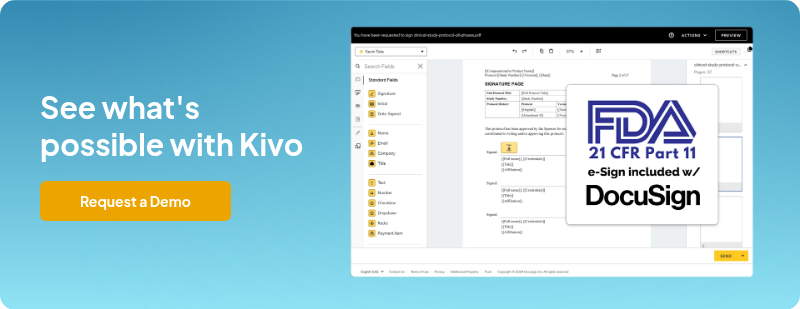
We’d love to show you how it works. Click below to request a demo and see Kivo in action.
