

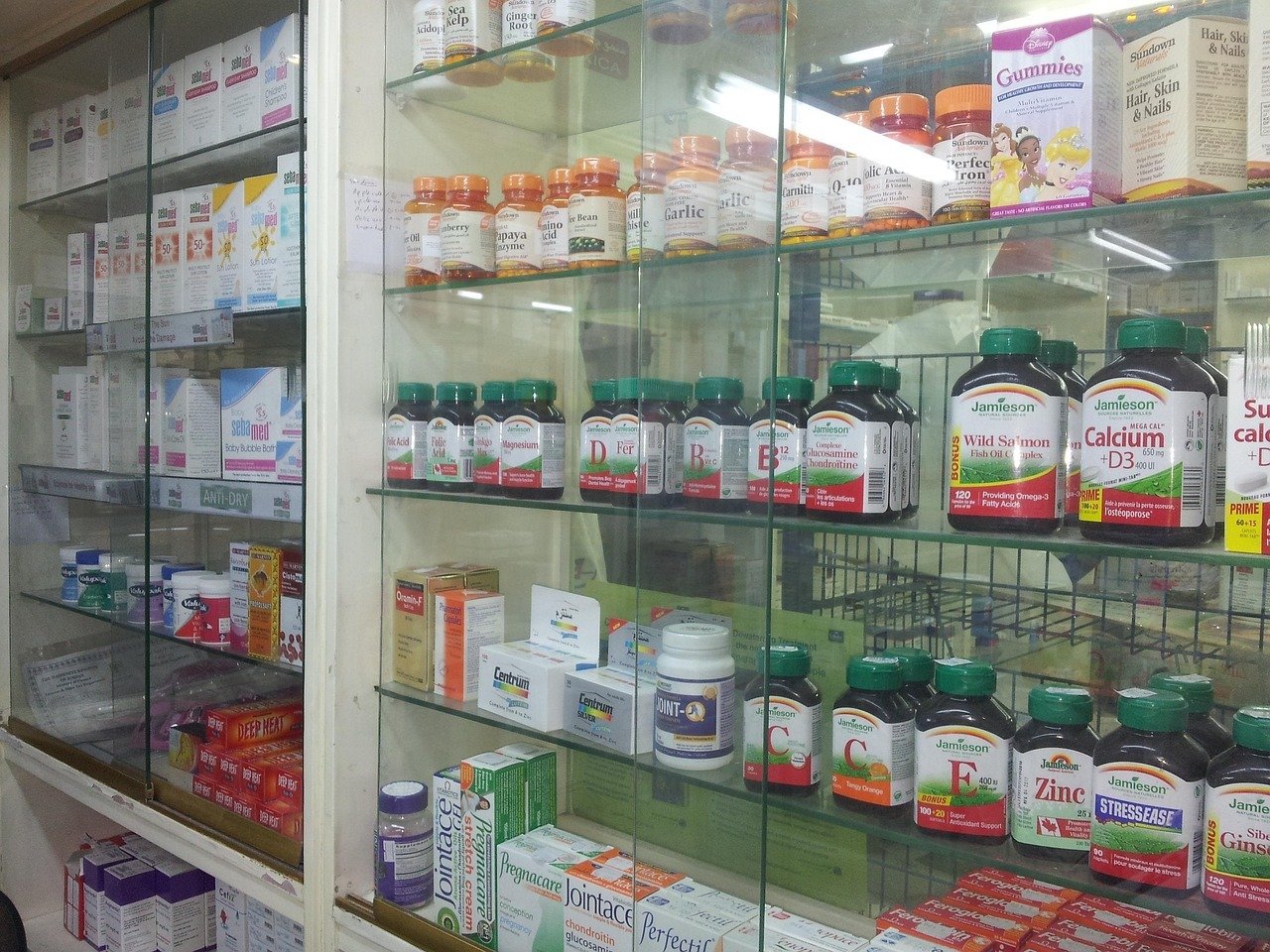
Most of us have had the experience of picking up a prescription at our local pharmacy.
It feels so simple.
The pharmacist checks your ID and insurance. They might ask you a few short questions. And then a small paper bag is slid to you from across the counter.
Inside that bag is a plastic bottle with a printed label, childproof cap, your medication, and probably 6 sheets of instructions and disclaimers that you will immediately throw away.
The process is simple, maybe even routine.
And what we don't see is the extremely complex combination of research and development, clinical trials, regulatory hurdles, and supply chain infrastructure that are required to get that little bottle of pills into your hands.
In this article, we're going to give you a window into the complex infrastructure required to bring prescription medications to your local pharmacy.
Most Drugs Fail In The Lab
Every prescription drug starts in the lab. Scientists test thousands of chemical and biological compounds, hoping to find winning combinations they can bring to market.
The vast majority of these projects, even those that show some early promise, fail before they every leave the lab.
According to the Congressional Budget Office, developing a new drug often takes more than ten years, and only a small number of drugs that enter human testing (already a high bar) ever make it to patients.
Before testing in humans, drugs are often studied in animals. More recently, AI developments have allowed for tests to be run in virtual environments using digital twins and in silico trials. If the early results look promising, the company can then apply to start clinical trials.
Clinical trials happen in three main phases:
-
Phase I tests safety in a small group of people.
-
Phase II looks at how well the drug works and studies the side effects.
-
Phase III tests the drug in hundreds or thousands of patients to confirm results and monitor safety.
At every step, researchers collect detailed information about dosage, side effects, and outcomes. Along the way, independent review boards help protect patients, while safety committees watch for warning signs.
By the end of these large clinical trials, the drug has years of data behind it.
But even then, approval isn't guaranteed.
Government Regulatory Review
In the United States, every prescription drug must be reviewed by the U.S. Food and Drug Administration before it can be sold.
The review process is extensive by design, and drug companies are required to meet an enormous burden of proof demonstration the medication is safe and effective. .
Regulators also look at:
-
How the drug is made
-
Where the ingredients come from
-
How quality is tested
-
What the label will say
-
What warnings and instructions will be included
Applications are often hundreds of thousands of pages long. They have to include clinical results, data analysis, manufacturing plans, and quality control details, and that's just the tip of the iceberg.
In Europe, the European Medicines Agency performs a similar role for the European Union, coordinating scientific evaluations across member states.
While the drug itself is the focus, the approval process is designed to validate the entire system behind that drugs development. Gaps in the system's regulatory requirements can kill the drug's application even if the drug itself works perfectly.
Manufacturing The Drug
Once the drug is approved, large-scale manufacturing can finally begin.
Drug factories must follow strict rules called good manufacturing practices (GMP). These rules cover everything from air quality to staff training.
Pharmaceutical manufacturing facilities require:
-
Temperature and humidity to be carefully controlled.
-
Advanced air filtration to reduce contamination.
-
Strictly enforced protective clothing rules.
-
Regular machine testing and quality control.
Every batch of medication is tested before it is shipped out. Tablets are checked to make sure they contain the correct amount of medicine. Liquids are tested for purity and quality. Labels are checked for accuracy and consistency.
If something is slightly off (even a small documentation error) an entire batch can be thrown out.
When overseas factories are involved in the manufacturing process, the FDA inspects them as well. Inspectors review records and attempt to verify that every company involved is following the rules.
The goal is safety and consistency. Every patient, regardless of the state they live in, should receive the same product, with the same quality.
The Global Journey To Your Pharmacy
As we just referenced, the pharmaceutical infrastructure that brings prescriptions to your pharmacy rarely takes place solely in the United States.
Many components are located overseas, including:
- Active ingredient sources and manufacturing
- Raw chemical precursors
- Contract formulation
- Clinical trial operations
- Packaging and component production
- Specialized lab testing
- Distribution hubs
Global systems can improve efficiency, but they also add complexity. During COVID-19, supply chain problems led to shortages of numerous medicines, exposing just how interconnected and fragile this infrastructure really is.
Today, most prescription drugs are tracked using special codes. In the United States, federal law requires most drugs to carry serialization information. This makes it easier to trace a product and prevent counterfeit medicines from entering the supply chain.
By the time a prescription reaches your local pharmacy, it will likely have crossed several borders and passed through numerous checkpoints.
Oversight Does Not End at Approval
Even after a drug is approved and actively being sold, regulatory oversight continues.
Monitoring continues as long as the drug is on the market.
Health care providers and patients can report side effects to the U.S. Food and Drug Administration through systems such as MedWatch. Manufacturers are required to track and report adverse events, and regulators review this data to look for patterns.
If new risks appear, agencies can require stronger warnings, limit how the drug is used, or in rare cases, remove it from the market. The FDA also inspects factories on a regular basis, both via routine checks and more thorough investigations when problems are suspected.
When issues are found, whether more minor issues like labeling mistakes or larger issues like contamination problems, recalls are issued. Most recalls are relatively minor and simply part of the regulatory and quality control processes that are part of this system, but occasionally, they can be a matter of life and death.
The Digital Backbone of Modern Medicine
Today, the vast majority of this infrastructure is built on digital systems. Companies keep electronic records of production, testing, and shipping. Software systems track every document and ever place where data enters the system, ensuring that everything is accounted for properly.
Regulators focus heavily on data integrity, meaning records must be accurate and protected from tampering.
When a pharmacist scans a barcode, that code connects to detailed information about where the drug was made, which batch it came from, and how it moved through the supply chain.
Most patients never see this side of things, but it's a pivotal part of getting prescriptions to your local pharmacy.
Back to the Pharmacy Counter
Next time you're waiting in line to pick up your prescription, thinking about all the work that goes into getting medicine into your hands will hopefully put a smile on your face.
As simple as that pickup may feel, it hides:
-
Years of scientific research
-
Large clinical trials
-
Government review
-
Carefully controlled factories
-
Global shipping networks
-
Ongoing safety monitoring
The system behind every prescription drug is complex and largely invisible.
And frankly, it's meant to be that way.
After all, the goal of all this is to get you the medicine that you need.
The pill may be small, but the system behind it spans the globe.
